
Seeing emotional phrases, slang, or symbols online can be confusing—especially when a short message seems to carry a much deeper meaning. If someone sends you a cracked-heart emoji, writes a sad caption, or posts a short heartbreak phrase on TikTok or Instagram, you may wonder: What exactly are they trying to say?
Broken heart messages usually express emotional pain, sadness, disappointment, rejection, missing someone, or the end of a relationship. The meaning can be serious, sympathetic, dramatic, or even humorous depending on the conversation and platform.
The 💔 emoji, for example, is commonly associated with heartbreak and emotional pain, but it can also be used ironically for relatively minor disappointments. This guide explains the meaning, common uses, texting examples, social media context, alternatives, and misunderstandings in simple language.
What Does a Broken Heart Message Mean?
A broken heart message is a text, caption, comment, or online expression used to communicate heartbreak, emotional hurt, sadness, loss, disappointment, or longing.
The phrase can refer to a romantic breakup, but it isn’t limited to relationships. Someone might use a broken-heart expression after:
- A breakup or rejection
- Losing someone they love
- Missing a friend or family member
- Being betrayed
- Ending a friendship
- Receiving disappointing news
- Losing a favorite team or competition
- Seeing a sad movie or series ending
- Experiencing a small but frustrating disappointment
The 💔 symbol is particularly recognizable in digital communication. Emojipedia describes it as representing the aching feeling of missing someone you love, while Dictionary.com notes that it can also express grief, setbacks, or exaggerated frustration.
So, if someone texts:
“I really thought we would work out 💔”
the likely meaning is genuine emotional pain.
But:
“They ran out of my favorite fries 💔”
is probably playful exaggeration.
In simple terms: a broken-heart message says, “This hurts,” but the seriousness depends on context.
Different Meanings on Social Media Platforms
The basic meaning stays similar across platforms, but the tone can change depending on where you see it.
WhatsApp Meaning
On WhatsApp, a broken-heart message is often personal because conversations are usually between friends, family members, partners, or private groups.
Examples include:
“I still miss you 💔”
“I can’t believe you did that to me 💔”
“Everything reminds me of her.”
Here, 💔 usually communicates genuine sadness, relationship problems, missing someone, or emotional disappointment.
Instagram Chat Terms
Instagram users frequently combine heartbreak phrases with emojis, captions, Stories, comments, and relationship-related posts.
For example:
“Some people leave, but the memories stay 💔”
A broken heart on an Instagram Story may also be intended as a vague emotional signal. The person may want others to understand that something is wrong without explaining everything.
Snapchat Slang
Snapchat communication tends to be short and informal. A user may send:
“He really said that to me 💔”
or simply:
“💔”
A single emoji can sometimes communicate an entire emotional reaction.
TikTok Meaning
On TikTok, heartbreak language can be more dramatic, relatable, or humorous. The 💔 emoji can appear in videos about breakups, sad songs, fictional characters, celebrity moments, or everyday disappointments.
It can also be intentionally exaggerated. For example:
“Me when my favorite show ends 💔”
That doesn’t necessarily mean the person is experiencing serious emotional distress. It may simply mean, “I’m ridiculously sad about this.”
This flexible use is common in online communication, where emojis can communicate both sincere and exaggerated emotions.
Broken Heart Messages in Texting: Examples
The easiest way to understand emotional texting is to look at realistic examples.
Romantic heartbreak
Person A: “Did you two really break up?”
Person B: “Yeah. I didn’t want it to end like this 💔”
Meaning: Person B is genuinely hurt about the relationship ending.
Missing someone
Person A: “Are you okay?”
Person B: “I just miss him so much 💔”
Meaning: The broken heart emphasizes longing and emotional pain.
Rejection
Person A: “How did your date go?”
Person B: “She said she only sees me as a friend 💔”
Meaning: The person is disappointed or emotionally hurt by rejection.
Betrayal
Person A: “Why aren’t you talking to her?”
Person B: “After what she did, I can’t trust her anymore 💔”
Meaning: The emoji reinforces feelings of hurt and betrayal.
Friendship
“I can’t believe we’re going to different schools 💔”
Here, the broken heart isn’t romantic. It expresses sadness about separation.
Humorous texting
“My delivery got canceled again 💔”
In this case, the sender is probably being dramatic for fun.
Social media example
“That ending destroyed me 💔😭”
This could refer to a movie, TV show, book, or fictional character rather than a real-life relationship.
These examples show why context matters more than the emoji itself.
When Should You Use a Broken Heart Message?
A broken-heart expression works best when the emotional context is already clear.
You can use it when you want to:
Express genuine sadness
“I’m still trying to process everything 💔”
Show that you miss someone
“Wish you were here right now 💔”
React to bad news
“I’m so sorry you’re going through this 💔”
Talk about a breakup
“I really thought we had a future together 💔”
Show disappointment
“They canceled the event at the last minute 💔”
Make a humorous reaction
“They changed the recipe and now it doesn’t taste the same 💔”
The same symbol can therefore communicate serious sadness or playful disappointment. This difference comes from the surrounding words and the relationship between the people communicating.
When Should You Not Use One?
Although broken-heart expressions are common in casual messaging, they aren’t appropriate for every situation.
Avoid using them in formal communication
A broken-heart emoji generally doesn’t belong in professional emails, official complaints, academic writing, or formal applications.
Instead of:
“I’m disappointed that my application was rejected 💔”
write:
“I’m disappointed to learn that my application was unsuccessful.”
Be careful with serious grief
If someone has experienced a major loss, sending only “💔” may feel too brief or impersonal.
A thoughtful message is usually better:
“I’m so sorry for your loss. I’m thinking of you and your family.”
Don’t assume someone is heartbroken
A person posting 💔 might be joking, reacting to entertainment, discussing a friend, or expressing a minor disappointment.
Don’t automatically conclude that they’ve had a breakup.
Don’t overuse it
If every minor inconvenience receives several broken-heart emojis, the expression can lose its emotional impact.
Use the symbol according to the seriousness and tone of the conversation.
Alternatives to Broken Heart Messages
Sometimes you want to express sadness without using the same emoji or phrase repeatedly.
Here are useful alternatives for different situations.
For genuine heartbreak
- “I’m completely heartbroken.”
- “This really hurts.”
- “I don’t know how to move on.”
- “I never expected it to end this way.”
- “I’m struggling to accept what happened.”
For missing someone
- “I miss you so much.”
- “I wish you were here.”
- “Things don’t feel the same without you.”
- “I keep thinking about you.”
For disappointment
- “That really hurts.”
- “I’m honestly disappointed.”
- “I was really looking forward to it.”
- “That ruined my day.”
For casual texting
- “I’m actually devastated 😭”
- “Why does this always happen to me?”
- “Not me getting emotional over this 😭”
- “This hurts for real.”
For humorous situations
- “My heart can’t handle this 😂”
- “I’m finished 😭”
- “This is tragic.”
- “Absolutely devastated.”
These casual texting phrases can sound more natural among friends, while more direct wording is better when the situation is genuinely serious.
Common Misunderstandings About Broken Heart Messages
Because online communication is short, people can easily misread emotional messages.
Misunderstanding 1: 💔 always means a breakup
Not necessarily.
The emoji can represent grief, disappointment, sympathy, missing someone, or an exaggerated reaction.
Misunderstanding 2: It is always serious
No. Online users often use emotional symbols dramatically or ironically.
For example:
“My favorite restaurant is closed today 💔”
The sender probably isn’t experiencing actual heartbreak.
Misunderstanding 3: It is a special texting abbreviation
The broken heart isn’t really a traditional internet abbreviation like “LOL,” “BRB,” or “IDK.” It is primarily an emoji and emotional symbol.
People may call it texting slang because of how frequently it appears in online conversations, but it isn’t an acronym.
Misunderstanding 4: Everyone interprets it exactly the same way
Not always.
The same 💔 can mean genuine heartbreak in one conversation and playful exaggeration in another. The words surrounding it, the relationship between the users, and the platform all influence interpretation.
Misunderstanding 5: A single 💔 explains everything
Sometimes it does—but sometimes it doesn’t.
If someone sends only:
“💔”
you may need additional context before knowing whether they’re sad about a relationship, reacting to news, joking, or simply expressing disappointment.
Broken Heart and Gen Z Online Language
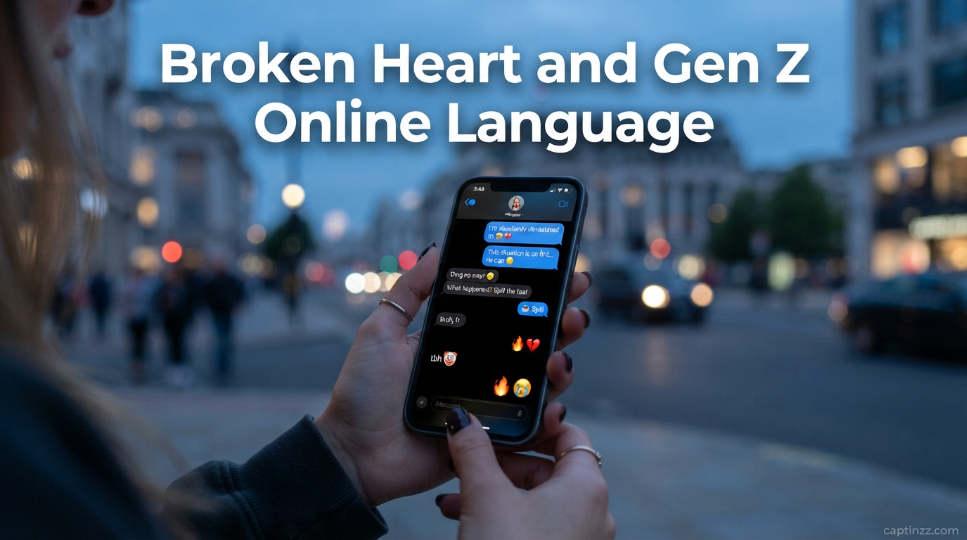
Modern online communication often compresses complicated emotions into short phrases, emojis, memes, and reactions.
This is why you’ll see combinations such as:
- “I’m done 💔”
- “Actually crying 😭💔”
- “Why would they do this to me 💔”
- “Not me getting attached 💔”
- “This ending hurt 😭”
- “I can’t recover from this 💔”
These aren’t necessarily fixed definitions or official texting slang. They’re casual digital expressions whose meaning changes with context.
Gen Z slang, TikTok language, Instagram chat terms, and other internet expressions frequently rely on exaggeration. Saying “I’m dead,” for example, can mean “That was extremely funny,” while “I’m heartbroken 💔” might refer to something as small as a canceled plan.
The broken-heart emoji itself has also been documented as having both sincere and ironic uses online. Emojipedia notes that ironic use increased on TikTok and X in early 2025.
FAQs
What does a broken heart mean in texting?
It usually means emotional pain, sadness, heartbreak, disappointment, loss, or missing someone. The exact meaning depends on the surrounding conversation.
Does 💔 always mean someone is heartbroken?
No. It can also be used humorously or dramatically for relatively minor disappointments.
What does 💔 mean on TikTok?
On TikTok, it can express genuine heartbreak, sadness, sympathy, emotional reactions to videos, or humorous exaggeration. The video and caption provide important context.
What does 💔 mean on WhatsApp?
On WhatsApp, it commonly communicates personal sadness, relationship problems, missing someone, disappointment, or sympathy.
What does 💔 mean on Instagram?
It can appear in DMs, captions, comments, and Stories to express heartbreak, grief, disappointment, or an emotional reaction.
Is 💔 a slang word?
No. 💔 is an emoji rather than an abbreviation. However, its informal and exaggerated use in online conversations can make it function like modern internet slang.
Can I use 💔 for a friendship?
Yes. A broken heart isn’t restricted to romantic relationships. It can express sadness when a friendship ends or when friends are separated.
Can 💔 be funny?
Yes. People often use it ironically for minor problems, such as missing a favorite meal, losing a game, or seeing an unwanted ending in a TV show.
Is “heartbroken” the same as “broken heart”?
They are closely related. “Heartbroken” normally describes a person experiencing intense emotional sadness, while “broken heart” can refer to the emotional state, concept, phrase, or emoji.
What should I reply to someone who sends 💔?
Look at the context first. If they appear genuinely upset, respond with empathy:
“Are you okay? I’m here if you want to talk.”
If the situation is clearly humorous, a casual response may be more appropriate.
Final Thoughts
Broken-heart expressions are simple but surprisingly flexible. In online messaging, 💔 generally communicates heartbreak, emotional pain, sadness, loss, or disappointment, but it can also be used humorously or dramatically. The most important rule is context. A 💔 in a private conversation after a breakup is likely serious, while the same emoji under a TikTok about a canceled TV show may simply be playful.
Whether you’re reading Snapchat slang, TikTok comments, Instagram messages, WhatsApp chats, or casual texts, don’t interpret an emotional symbol in isolation. Look at the words, situation, relationship, and overall tone. Once you understand that distinction, broken-heart messages become much easier to read—and much easier to use naturally in your own online conversations.
